
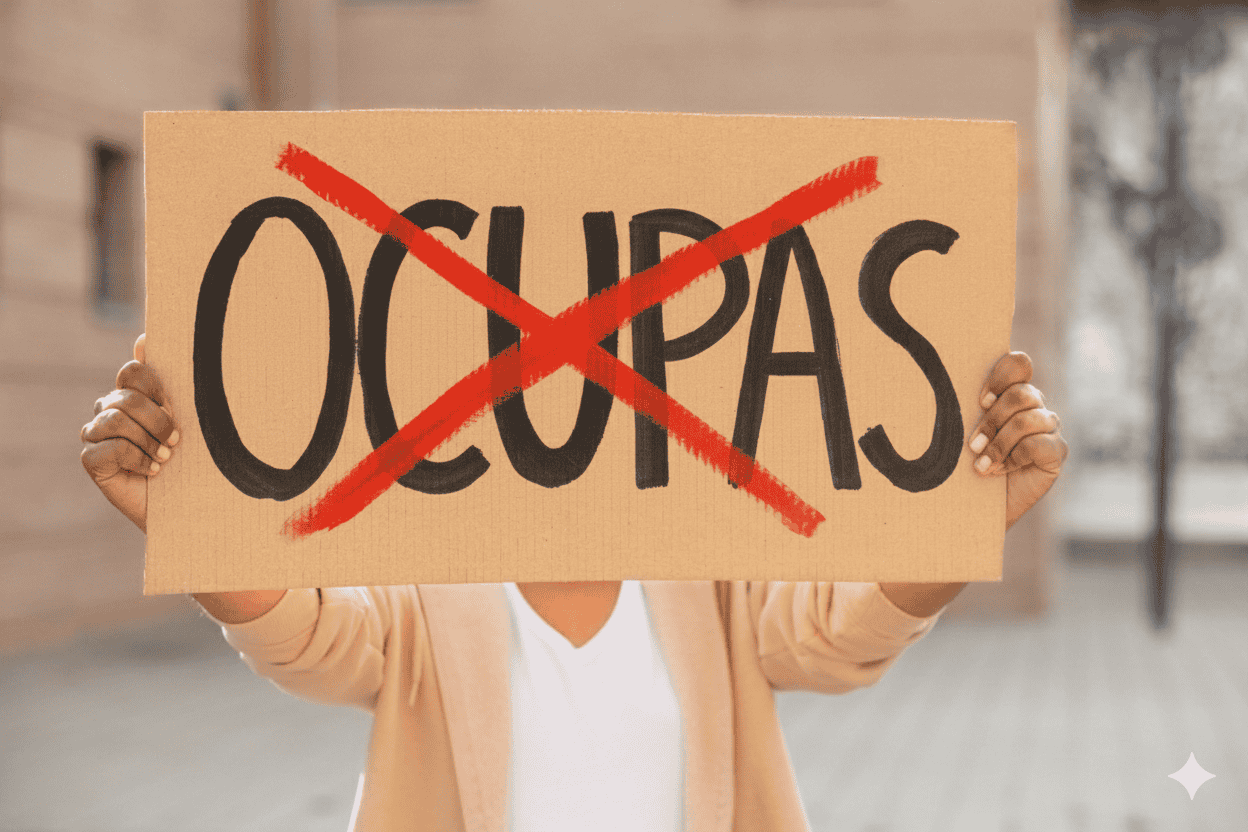
Okupas in Spain – How to protect your dream home on the Costa Blanca
Owning a property in Spain is a long-held dream for many people. Sun, sea, the Mediterranean lifestyle – all in your own home. But if you’re looking into buying a house or apartment, sooner or later you’ll come across a topic that often makes headlines: Okupas (squatters).
In this article, you’ll find out what Okupas are, what the legal situation in Spain looks like and – most importantly – how you, as a buyer or homeowner, can protect yourself in the best possible way.
What are Okupas?
The term Okupas comes from the Spanish verb ocupar (to occupy). It refers to people who take over empty apartments or houses without the owners’ permission. Particularly affected are holiday homes or second residences that remain unoccupied for long periods
Why is this such a big issue in Spain?
Compared to other countries, Spain has a large number of vacant properties – from holiday homes on the coast to empty city apartments. These properties often become targets for squatters.
Media attention is high, but it’s important to know: the vast majority of property owners on the Costa Blanca and in other regions do not experience problems with Okupas, as long as they take preventive measures.
Legal situation in Spain
Spanish law distinguishes between two scenarios:
👉 Within the first 48 hours after occupation:
The police can quickly evict the intruders, as it is considered trespassing.
👉 After 48 hours:
It becomes more complicated. From this point on, the property is often considered the “residence” of the squatters. The owner must initiate legal proceedings, which takes time and money.
⚠️ Important: Do not act on your own (e.g., changing locks or cutting off electricity), as this could make you criminally liable.
Risks for property owners
👉 Loss of rental income or property value👉 High legal and court costs
👉 Emotional stress if your property is occupied
Protection measures for property buyers on the Costa Blanca
🔒 Security solutions
High-quality locks, alarm systems, surveillance cameras
Smart-home systems that you can control via app
👀 Regular checks
- Ask neighbours, friends or property managers for support
- Use a property service that regularly inspects your home
🛡️ Insurance
- Take out special policies that cover costs in the event of occupation
⚖️ Legal advice
Involve experts already during the purchase processSeek immediate legal assistance in case of emergency
Conclusion: Don’t be afraid of Okupas – your dream home is safe
Although Okupas are a well-known topic in Spain, with the right measures and professional support you are well protected.
The Costa Blanca remains one of the most attractive places to invest in property or move your residence. If you are well-informed and prepared, you can enjoy your dream home in Spain without worries – and without fear of unwanted guests.
📞 Contact me for more information on:
👉 Alarm systems
👉 Insurance
👉 Legal advice

9 and 12 October on the Costa Blanca: 2026 Holidays
9 and 12 October: Two holidays that reveal another side of the Costa BlancaCoffee in a village square, lunch with family and a walk by the sea: October offers a chance to get to know the Costa...
more
Healthcare in Spain: Doctors, Hospitals and Modern Medical Care on the Costa Blanca
How good is healthcare in Spain?This is one of the most common questions asked by people planning to relocate to the Costa Blanca, purchase a holiday home, retire in Spain, or simply spend...
more
5. Experience a Safari in Your Own Car – Safari Aitana in Penàguila, Costa Blanca
Safari Aitana in Penàguila is one of the most unique attractions in the Province of Alicante. Nestled in a spectacular mountain landscape, the park offers an experience that is still quite rare in...
more
4. Fonts de l’Algar – The Natural Paradise of the Costa Blanca
When I have visitors on the Costa Blanca or when I recommend day trips, there is one place that almost always makes it onto the list: the Fonts de l’Algar near Callosa d’en Sarrià. Even after so...
more